Greeting spring like Apollo

Dear Butterflies,
Hello after some time!
I traveled back to Indiana last week and took some time off of work to visit with family. Toward the beginning of my stay, I sat down at one of my favorite coffee shops in Indianapolis to write this newsletter. I was in a bliss state, recharged by reunions with my mom, my dad and stepdad, my sister and niece and nephew, friends, and my doggy dears Grizzly and Apollo. The love and familiarity that I come home to in Indiana gives me a calm, abundant energy, and I was excited to share that with you all that day.
Sipping an iced chai, I wrote about spring and how it awakens desires for change and growth… how ideas within us are surfaced that we didn’t even know had been stewing all winter. Jobs, relationships, places that were perhaps beginning to feel constricting reflect in a new light that reveals expansive possibilities. Still, I also wanted to recognize how every year, no matter how many seasonal cycles I experience, it always feels like spring speaks too soon. Magnolia trees flower and I think, we made it, only to find myself bundling up in my winter coat the next week wading through their fallen petals on the sidewalk while trying to hold tight to my bright ideas. Those last days of cold, gray weather can feel nearly intolerable, as if they’re holding us back from what we feel should already be ours.
Earlier that morning before I left for the coffee shop, I took Apollo and Grizz outside for a walk during a short clearing of the otherwise constant Indiana clouds. I watched Apollo, who is 17 but forever my baby boy, saunter along slowly, taking in the smells of grass and wading through patches of dandelions and scattering their seeds with his movements. It seemed to me that he was experiencing his walk in a way he never had before—a seasonal greeting that was neither hello nor goodbye, not tied to a memory or a wish, just a happiness and acceptance to be there now. I wondered if he knew somewhere in his aching, arthritic bones that it might be the last spring he would greet. He seemed in perfect peace, as if he could walk into the eternal daylight like the sun god he is.
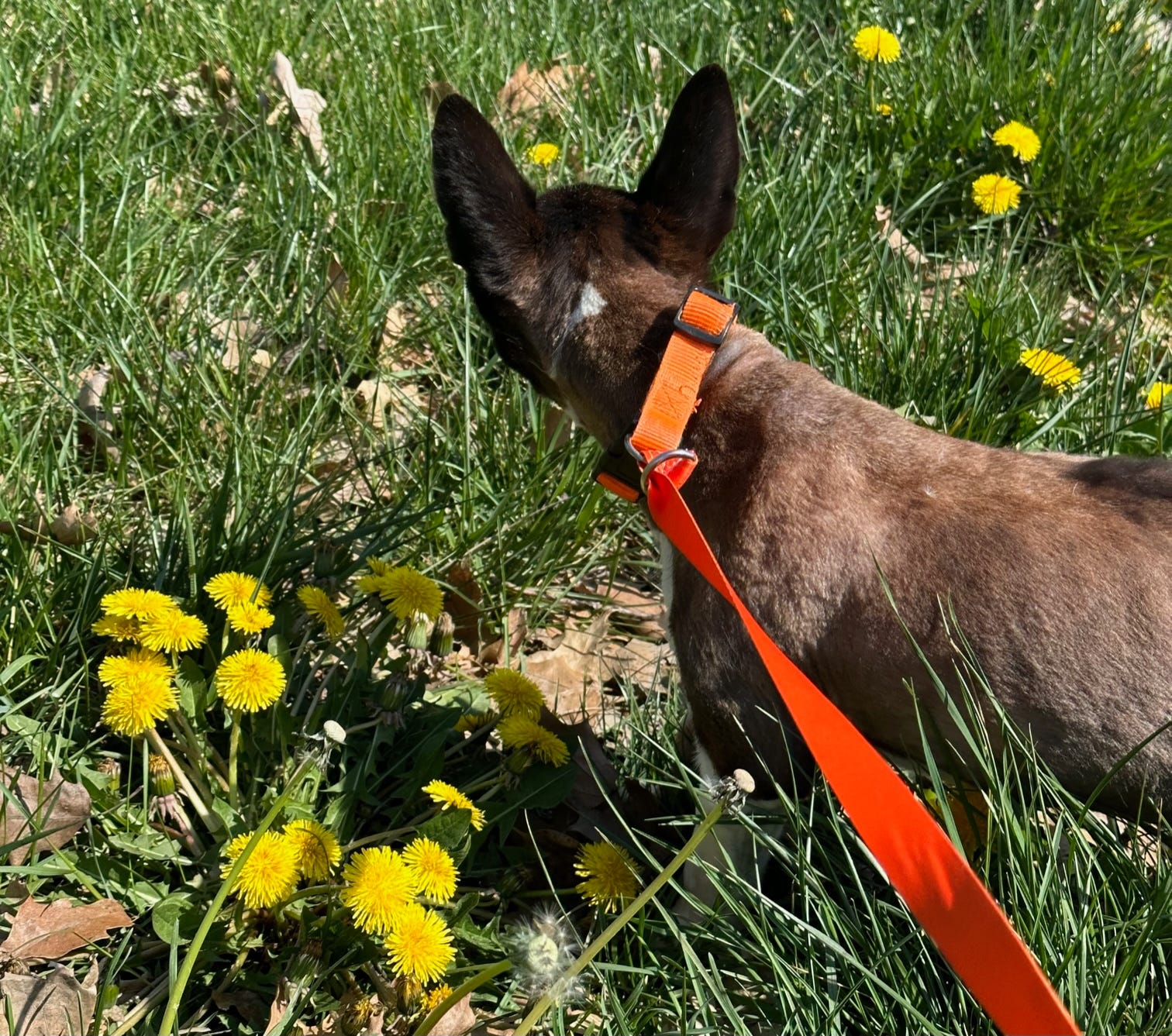
Watching Apollo, I had a faint recollection of someone telling me that there is a spike in deaths in the spring. I couldn’t quite place it, but today I remembered a novella by Marci Vogel called Death and Other Holidays and grabbed it off my bookshelf. When I flipped open the first few pages I found this passage:
They say winter is the season of death, but anyone I’ve ever known who’s died, they died in the spring. They say you’re supposed to get this miraculous sense of renewal and promise, but it never happens that way, either. Libby says it’s because we live in Los Angeles, and our seasonal clocks are set by new lipstick colors, but I don’t think that’s it. Maybe the changes aren’t as obvious as in colder climates, but spring is spring, and it always feels kind of precarious. I mean, there’s so much upheaval, all those blossoms forcing their way out of winter branches, tiny sprouts trying to break through the dirt. The whole business just seems a colossal effort, and if you don’t have a pretty good reason for it, well, I guess I can understand why the entire scheme might not be worth another round.
As a midwesterner, it does feel miraculous to me when spring finally arrives, as teasing as it can be. But whether it’s the pollen or allergy medicines clogging up the system, the new levels of exertion the season calls for, or the memories of loved ones who aren’t around to witness the greening of everything, spring can feel dense, too. In that coffee shop last week, I was feeling the levity and possibility of spring. But just a few hours after that I received sudden news about a cousin’s health that came to be the centerpiece of the days that followed. The rest of my time in Indiana was not about this newsletter or my spring dreams—it was filled by big and small gestures of service that flow automatically when acute events strike that remind you that this life is precious.
So it is now, back in Connecticut a week and a half later, my cousin alive and recovering in Indiana, that I sit down to finish this newsletter to give you some words on spring that have more range than the original perspective I sought to share. This is my reminder to you (and to myself) that you’re exactly where you need to be, whether you’re dreaming, struggling, sniffling, or simply wading through the dandelions. I wish you all peace and comfort, and I hope you’re finding ways to express yourself and to be present in your body as you experience the changes this time of year can bring.
I leave you with a few tidbits that I’ve been storing in the back of my mind to share with you that remind me that all around us people are opening up humbly to this great mystery of life, sharing their stories, and helping others along the way. I’d love it if you sent me stories, songs, art, movies, podcasts you’ve come across to molt.ashlyn.anderson@gmail.com.
Crying in H Mart with Michelle Zauner
Michelle Zauner of the band Japanese Breakfast published a memoir in 2021 called Crying in H-Mart about her mom’s death, the experience of grief, and how Korean cooking became such a salve in her healing. I have been a Japanese Breakfast fan for a couple of years now, and even saw her play last year at the Yale Spring Fling, an outdoor, end-of-the-school-year campus concert, so it was about time that I picked up her memoir. There’s a depth in Zauner’s lyrics that conveys a pain I recognize, but her music is all the more soul-bending now that I know more of her personal story and how her experience of losing her mother shaped her music… and in many ways contributed to her rise to fame.
After years of making music, it was only after her mother’s death that Zauner started to break through with Japanese Breakfast and their first album Psychopomp. Psychopomps are creatures, spirits, or deities who guide newly deceased souls to the afterlife. She chose a photo of her mother for the album cover art, and in Crying in H Mart, she talks about the emotion of seeing ecstatic fans leaving her show in Korea with Psychopomp vinyls tucked under their arms, each with images of her mom reaching out. Toward the end of the memoir, she says that though she’s never really believed in a god or religion, the way her career took off after her mom’s death hardly seems a coincidence—more like her mom insisted on it from the other side to transform her daughter’s pain. Zauner’s music and her memoir offer a kind of collective grief experience with her fans, and their success is a testament to the resonance of her life experience.
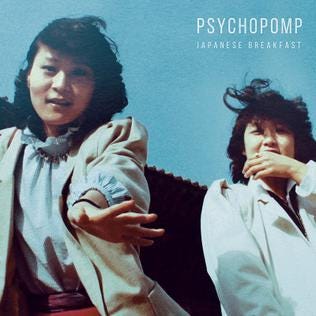
It’s a song on Japanese Breakfast’s most recent album that stands out to me most when I think about Zauner’s experience losing her mom, and about what grief can feel like:
When the world divides into two people
Those who have felt pain
And those who have yet to
And I can't unsee it
Although I would like to
Posing in bondage
I hope you come home soon
Crying in H Mart is an honest and healing read. Zauner also recorded an audiobook version in her own voice and a movie based on the memoir is underway, so I hope you get a chance to experience it in some way.
Iam Tongi on American Idol
It’s been many years since I’ve tuned into American Idol, but back home in Indiana I sat down with my stepdad to watch an episode from the current season. After we watched Iam Tongi’s perfomance in the most recent episode, my stepdad went back and had me watch his audition song: Monsters, by James Blake.
Iam dedicated the song to his dad, who died a couple of months before his audition, and there’s a reason why it’s received over 15 million views on YouTube and who knows how many millions of tear drops.
Learning Kintsugi from Lana Del Rey
If you ask me, Lana Del Rey’s most recent album sounds like an angel’s stream of consciousness. It feels true to Lana the Artist, and it’s far more poetry than pop. Midway through the album there’s a song called Kintsugi, which is a word that refers to the Japanese art of repairing broken pottery pieces with gold. It’s about emphasizing imperfections and the additive potential of precious scars. As Lana puts it, kintsugi is how the light shines in. I get choked up almost every time listening to the song because it’s about the experience of witnessing a close one die—the personal loss and the thoughts about your own life that it brings up—and how to make sense of life and feel whole afterwards.
I had never read this beautiful newsletter until just now. Which is interesting because I so needed this read today. As winter is beginning to set in, it’s important for me to have the reminder that spring is coming.